





FREE SHIPPING $350+
Free shipping on orders of $350+ Restrictions Apply.
No Code Needed


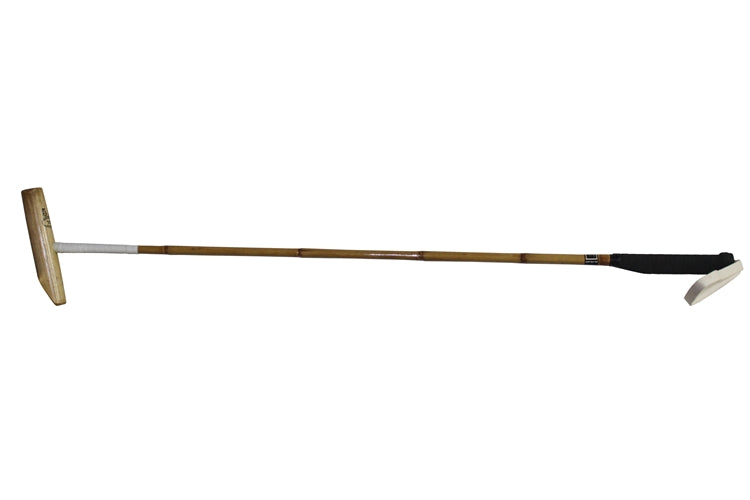
A custom polo mallet isn't about a fancier finish. It changes how the weight sits in your hand, how the cane responds when it makes contact, and how consistent your swing feels from one chukker to the next. At Tato's Mallets, that's still done the same way it was when the company started: by hand, one mallet at a time. Here's what that actually means for a player deciding between something off the shelf and something built around them.
Tato's Mallets began in 2001 in Wellington, Florida. The founder, Tato, was an Argentine craftsman who loved fine woodworking and knew polo from the inside, not as an outsider building equipment for a sport he'd only read about, but as someone who understood what a mallet actually needs to do on the field. He set up shop in a space just 750 square feet, and every mallet that came out of it was made the same deliberate way: one at a time, by hand.
That starting point is really the whole reason "custom" carries weight here. Tato wasn't scaling a generic equestrian product line. He was building something specific to one sport, in one of the places, Wellington, that has become a true center of American polo. The equipment reflected the game itself.
People often assume "custom" just means a color choice or a team logo stamped on the handle. That's part of it, but it's not what changes how the mallet plays. The real differences show up earlier, in decisions most players never see:
Balance. A hand-balanced mallet is checked and adjusted by feel, so the weight sits where your swing wants it, not wherever a fixed template happens to land.
Shaping. Every mallet is shaped and sanded by hand, which allows for small corrections along the way that a machine-finished piece simply can't get.
Fit to the player. Tato's Mallets separates its lineup into adult, kids', and advanced options because a junior player, a club-level adult, and a competitive player are not swinging the same way, even if their mallets look similar side by side.
Consistency, start to finish. Because a person is doing the work at every stage, small issues get caught and corrected as they happen, instead of only at final inspection.
A mallet looks like a simple object. It isn't one to get right. The cane, the head, and the wrap all have to work together, and that only happens when someone can adjust one part in response to how the others are coming along, which is exactly what hand craftsmanship allows for.
This is usually the question players land on once they realize mallets aren't interchangeable: does balance really change anything mid-swing? It does. A mallet that's been hand-balanced changes how early or late the head "arrives" as you swing through, which affects how much you have to compensate for timing on your own.
Tato's Mallets describes this as Precision, every mallet balanced and shaped by hand for real control, not an average. The second part of that is Passion, which shows up less in any single measurement and more in the small choices, like cane selection and finish, that don't appear on a spec sheet but are felt on the field. The third is Patience: a mallet can't be rushed, and each one takes the time it needs to reach its finished form. Those three words aren't a slogan pulled out of nowhere, they're how the team describes the actual process.
|
Factor |
Standard / Off-the-Shelf Mallet |
Custom-Built Mallet (Tato's Mallets) |
|
Balance |
One fixed weight distribution for every player |
Adjusted by feel to match an individual swing |
|
Shaping |
Often finished by machine for speed |
Shaped and sanded by hand at each stage |
|
Fit |
A single size profile applied broadly |
Adult, kids', and advanced tiers matched to the player |
|
Quality checks |
Reviewed once production is complete |
Caught and corrected continuously during the build |
|
Personal identity |
Usually not part of the equation |
Can reflect a player's or team's identity |
None of this means every player needs to start with a fully custom mallet. Someone new to the sport may be perfectly well served by one of the foot mallets built for training and club play. The point is knowing that a further option exists, a mallet built around your own swing, and that it comes from an actual process, not just a label on the box.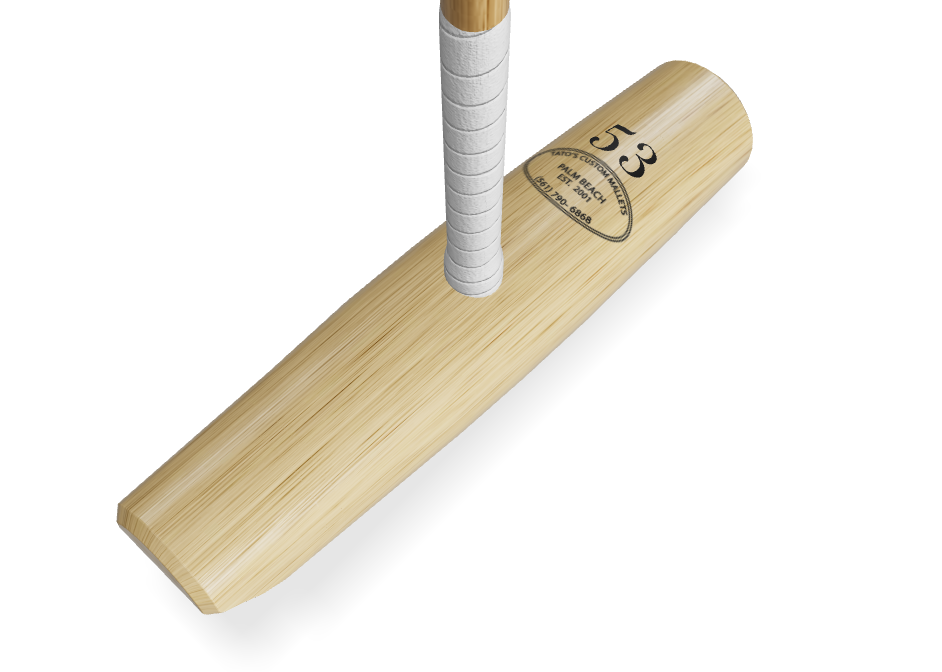
It's fair to wonder whether a company can grow and still keep the handmade part of "handmade." Here's how that's played out for Tato's Mallets over the years.
|
Then |
Now |
|
A 750 square foot workshop |
A 6,000+ square foot facility |
|
One craftsman working in Wellington, FL |
A team carrying that same approach forward |
|
Local players in South Florida |
Players and equestrians across 50+ countries |
|
A focused mallet-making shop |
A full catalog of 10,000+ products spanning mallets, tack, and custom apparel |
What stayed constant through all of that growth is the method itself, mallets are still shaped, sanded, and balanced by hand. The reach expanded well beyond South Florida, but the process that made the original mallets worth trusting didn't get swapped out along the way. For a player choosing where to buy, that continuity matters more than the size of the building it happens in.
If you're weighing whether to go custom, here's a practical way to approach it:
Start with your stage of play. The lineup is built around this on purpose, adult, kids', and advanced tiers exist because the right starting category matters more than the most expensive option.
Describe your swing, not just a set of numbers. A hand-balanced mallet is meant to be adjusted to how you actually play, so be ready to talk about how your current mallet feels in a swing, not only its length and weight on paper.
Ask how the shaping is done. A mallet shaped and sanded by hand throughout the process feels different from one that was only touched up by hand at the very end.
Match the build to your role on the field. Training, club matches, and competitive polo each put different demands on a mallet, and a custom build should reflect that instead of treating every use the same.
Give it time. A mallet that "can't be rushed" isn't going to be a same-day order, and that's by design, not a delay you have to work around.
Tato's Mallets describes its approach as "For Polo, By Polo," and that's not just a tagline sitting on a page somewhere. It shows up in how the mallets get designed in the first place: with input from professional players, not just from craftsmen working in isolation from the sport itself. A woodworker can build a beautiful piece of equipment. Only a player can tell you whether it actually holds up through a full chukker.
That input loop matters more for mallets than almost anything else in a player's kit. A saddle or a pair of boots has to fit the rider. A mallet has to fit the swing, absorb repeated contact, and still feel right on the fiftieth strike of the day, not just the first. Getting that right takes feedback from people who are actually out there playing, which is part of why the company frames its work around what it calls a "heritage of trust", decades spent serving players and teams who kept coming back, chukker after chukker, season after season.
The same idea of fit carries across the rest of what Tato's Mallets builds, from saddles to boots, where the goal is described simply as comfort tailored to the person wearing or using the piece. A custom mallet is really the same philosophy applied to the one piece of equipment a player is holding for the entire match.
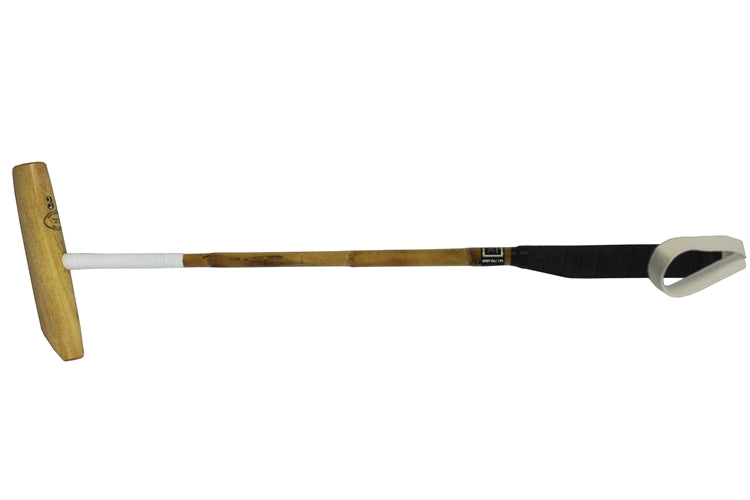
It would be easy to treat a mallet as a plain transaction, you need one, someone sells one, done. But that's not really why players have trusted Tato's Mallets for more than two decades. It comes back to Tato himself, who brought genuine, firsthand knowledge of the sport into a small workshop and built something meant for that sport specifically, rather than adapting general woodworking or equestrian supplies after the fact.
The company describes itself as honored to be part of a player's polo journey, from weekend players to professionals, and that framing only makes sense if the equipment is treated as part of an ongoing relationship rather than a single purchase. A custom mallet fits into that relationship naturally. It's not an upsell tacked onto a standard order, it's the same instinct that started in a small Wellington workshop back in 2001, just applied to one player at a time.
That commitment now runs across everything Tato's Mallets makes, not only mallets but the wider range of polo equipment and tack built for one sport, rather than stretched across a general equestrian market. It's a narrower focus than a lot of retailers choose to take, and that narrowness is exactly the point, depth in one sport beats breadth across many when the equipment is this specific.
A custom polo mallet changes the balance, the shaping process, and the overall consistency of the finished piece, appearance is only a small part of it.
The company traces back to 2001, when Tato, an Argentine craftsman, opened a 750 square foot workshop in Wellington, Florida.
Hand craftsmanship is guided by three ideas the team returns to again and again: Precision, Passion, and Patience.
Growth hasn't replaced the process, the workshop is now 6,000+ square feet and reaches 50+ countries, but mallets are still shaped, sanded, and balanced by hand.
Deciding between standard and custom really comes down to one question: do you want equipment built for an average swing, or for yours?
What actually makes a polo mallet "custom" instead of standard?
It comes down to process, not just appearance. A custom mallet is shaped, sanded, and balanced by hand with the individual player's swing and stage of play in mind, rather than built to one fixed spec for everyone.
Is going custom really just about color or a team logo?
No, that's the visible part, but not the meaningful part. The changes that affect performance are balance, shaping, and consistency, all of which happen well before anything gets branded or painted.
Who started Tato's Mallets, and why does that background matter?
Tato, an Argentine craftsman, founded the company in 2001 with a genuine understanding of polo, not just woodworking. That firsthand knowledge of the game is why the process centers on how a mallet plays, rather than just how it looks.
Does a new player need to go custom right away?
Not usually. The foot mallets built for training and club play are a solid starting point. A fully custom, advanced build tends to make more sense once a player has a clearer feel for their own swing.
Has the company's process changed as it's grown?
The footprint has, going from a 750 square foot workshop to a facility of 6,000+ square feet serving players in 50+ countries. The process hasn't, mallets are still made by hand rather than through mass production.
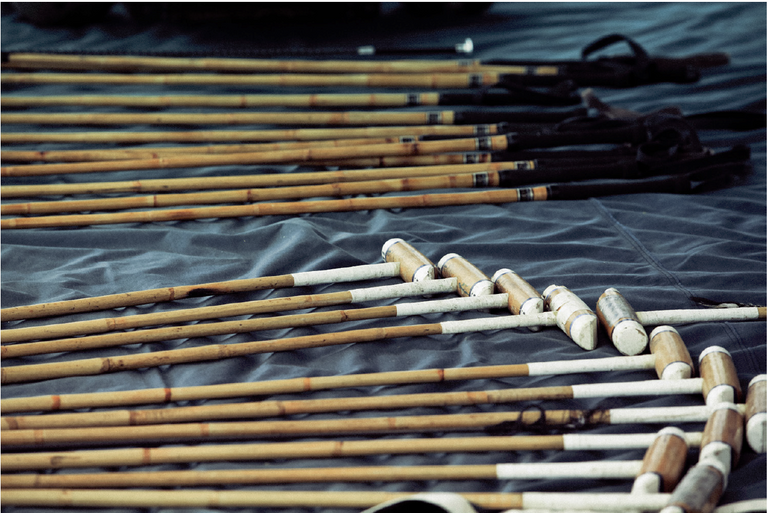
Tato's Mallets by Jose and the Tato's Mallets team in Wellington, Florida, handcrafting polo mallets and tack since 2001. Follow the workshop on Instagram, or reach the team at info@tatosmallets.com or +1 (561) 790-6868.